
Stock the Cupboard
Feb 12, 2026
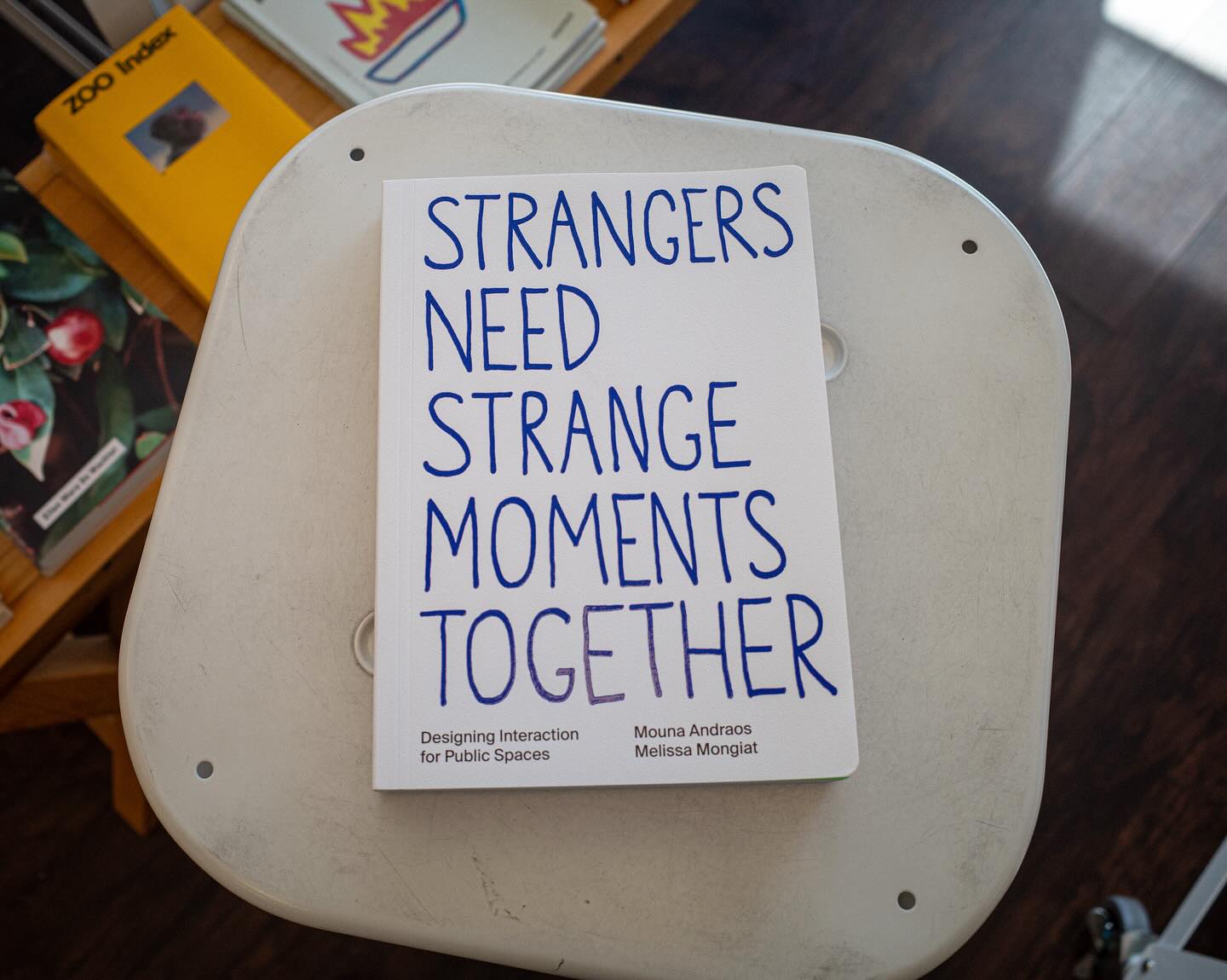
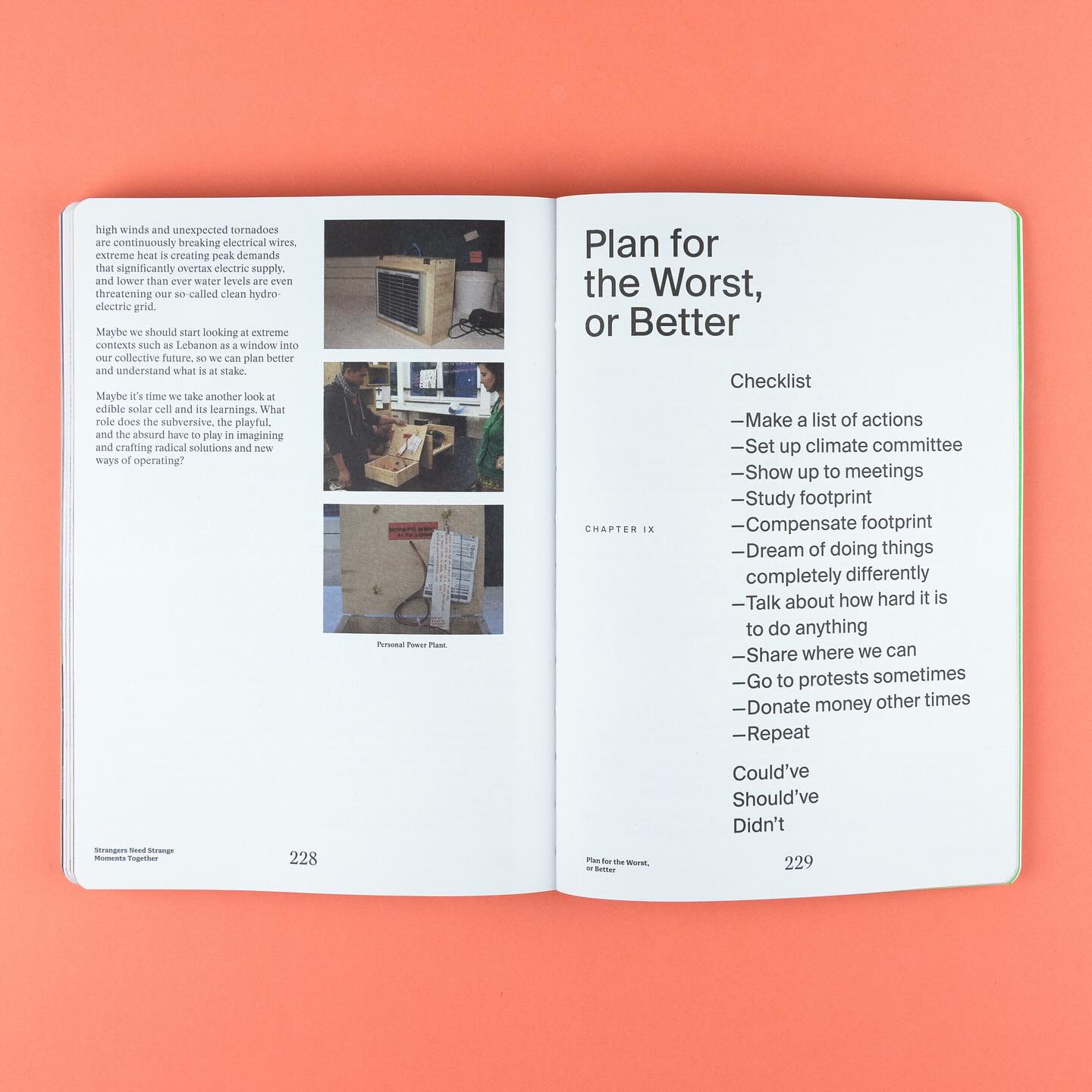
Last month I finished Strangers Need Strange Moments Together, a book by Montreal studio Daily tous les jours about public installations that create unexpected encounters in cities. The title is the thesis, in a sense that they measure success by whether strangers talked to each other. Whether people felt less alone. Whether the installation created what they call "infrastructure for the human spirit."
The book opens with something I've been thinking about ever since: we're surrounded by people on the street, but everyone's alone. We connect mostly with people we already agree with, mostly online, through platforms designed to divide us. Meanwhile the public spaces that used to support informal social connections, the accidental encounters, the ad hoc moments, are now filled with people staring at screens.
The question the book asks: can we coax people out of their bubbles? Not through memes or online campaigns, but in the flesh. Through moments strange enough to make you notice the person next to you. Whether you call it art or infrastructure, strangers need strange moments together.
Infrastructure as experience
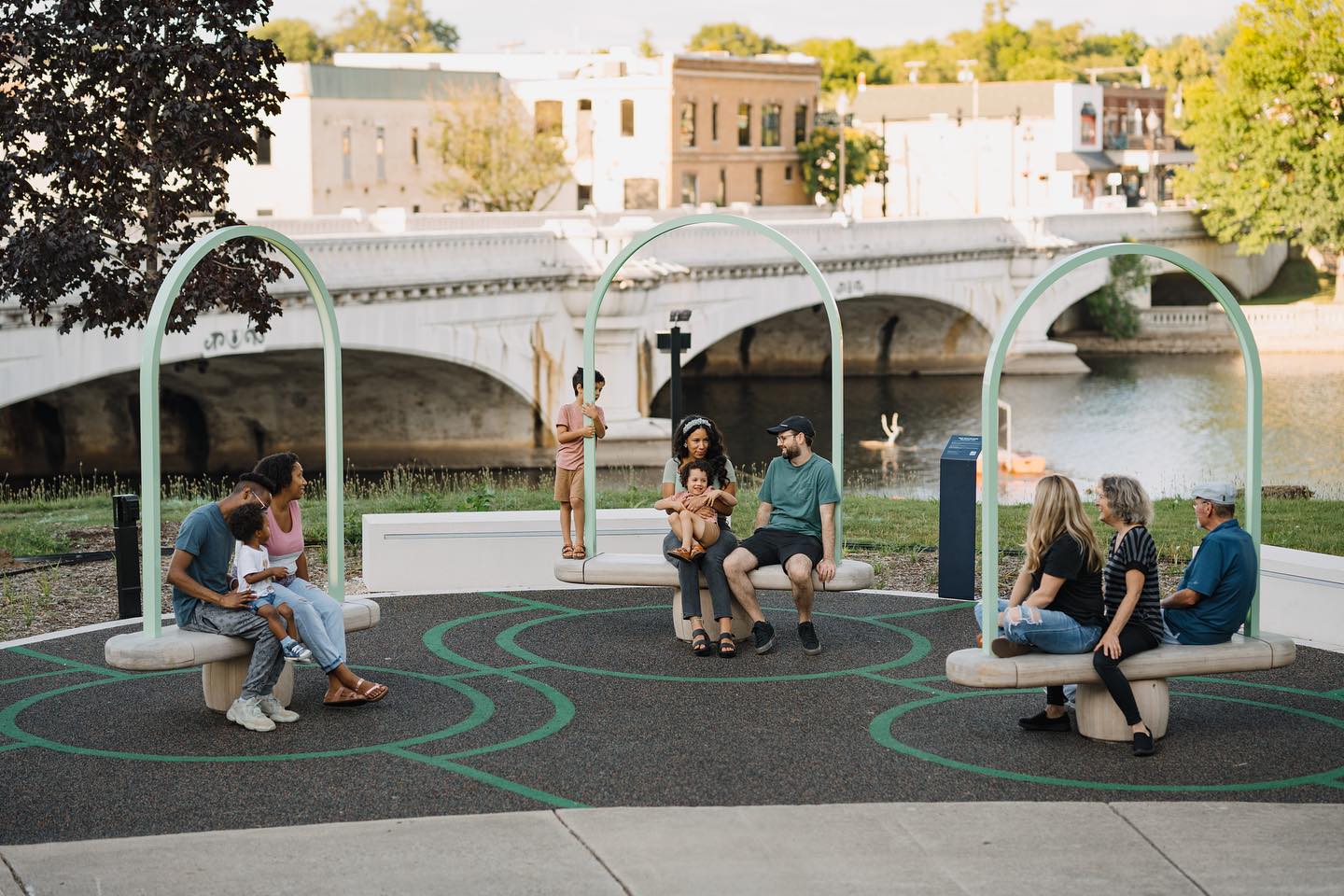
A set of swings in Montreal.
Each swing plays notes depending on high you swing. When you swing next to someone else, in rhythm, harmonies emerge that aren't available alone. The melody exists only between people. Their team tracked the swings across different cities. Their finding: 1 in 3 people talked to a stranger.
Stockholm's Metro
Stockholm has art in 90 of its 100 stations. Each station reflects its neighborhood. T-Centralen has calming blue vines because rush hour is stressful. Stadion has a rainbow ceiling near Pride. Odenplan has a light installation shaped like the artist's son's heartbeat during birth. It started in the 1950s as anti-vandalism strategy — turned out people don't spray-paint caves painted like the earth's core or covered in fluorescent heartbeat patterns.
Seventy years in, the system is both gallery and infrastructure. Everyone on the platform sees the same ceiling. That shared looking-up — the collective experience of the same strange, beautiful thing in a mundane moment — is doing quiet social work that no one budgeted for and no one can quite measure.
Eventually the book winds down with a passage that resonates:
"Amateur intelligence is actually a good way to describe the lens through which we want to imagine future cities. While the AI-driven smart city supposedly supplies you with everything you need without ever having to think about it, the city run on amateur intelligence is a place where people come together to be the intelligent force that transforms their environment, in an active, intentional way, not as inputs for insatiable datasets. Our projects are not about proposing end solutions, but more about creating a context for communities to find their own paths."
Not as inputs for insatiable datasets. As the intelligence itself. That one stuck.
Stocking the cupboards of your imagination
Then last week, by accident, something connected.
I listened to Rob Hopkins on the Upstream podcast talking about climate futures and imagination. He uses a phrase: "stock the cupboards of your imagination." His argument is that to envision a different future, a low-carbon city, a car-free street, we need to feed our brains with stories of what's already possible. We need ingredients to imagine change.
Research backs this up. Ask someone to imagine a holiday in Italy and they'll draw on what they've actually experienced. Trips, films, meals. The imagined version is assembled from real ingredients. No ingredients, no dish.
So Hopkins advocates for "pop-up tomorrows." Temporary interventions that let people physically experience a version of the future.
In April 2019, Extinction Rebellion turned protesting into a new form; London's Waterloo Bridge was turned into a forest for eight days. Instead of passing thundering traffic, you then don't just intellectually understand a car-free street could work but actually feel what it's like to walk through trees where cars used to be. The smell, the sound, the temperature shift. Your body knows something new is possible.
These experiences can be so profound they change careers and even lives, he said. Not because someone argued you into it or showed you data. Because you encountered a future tangible enough to imagine inhabiting.
Daily tous les jours builds strange moments between strangers in the present. Hopkins builds strange moments between people and the future. They're working on different problems with different tools in different cities. But they share a conviction: you can't think your way into a different relationship with the world. You have to encounter it. In the flesh. With your senses. Surrounded by other people.
The swings don't explain community. They produce it. The bridge forest doesn't argue for car-free streets. It grows one under your feet. Both trust that if you design the right conditions, if the moment is strange enough, vivid enough, shared enough, people will do the rest. You don't need to convince them. You need to give them the experience and get out of the way.
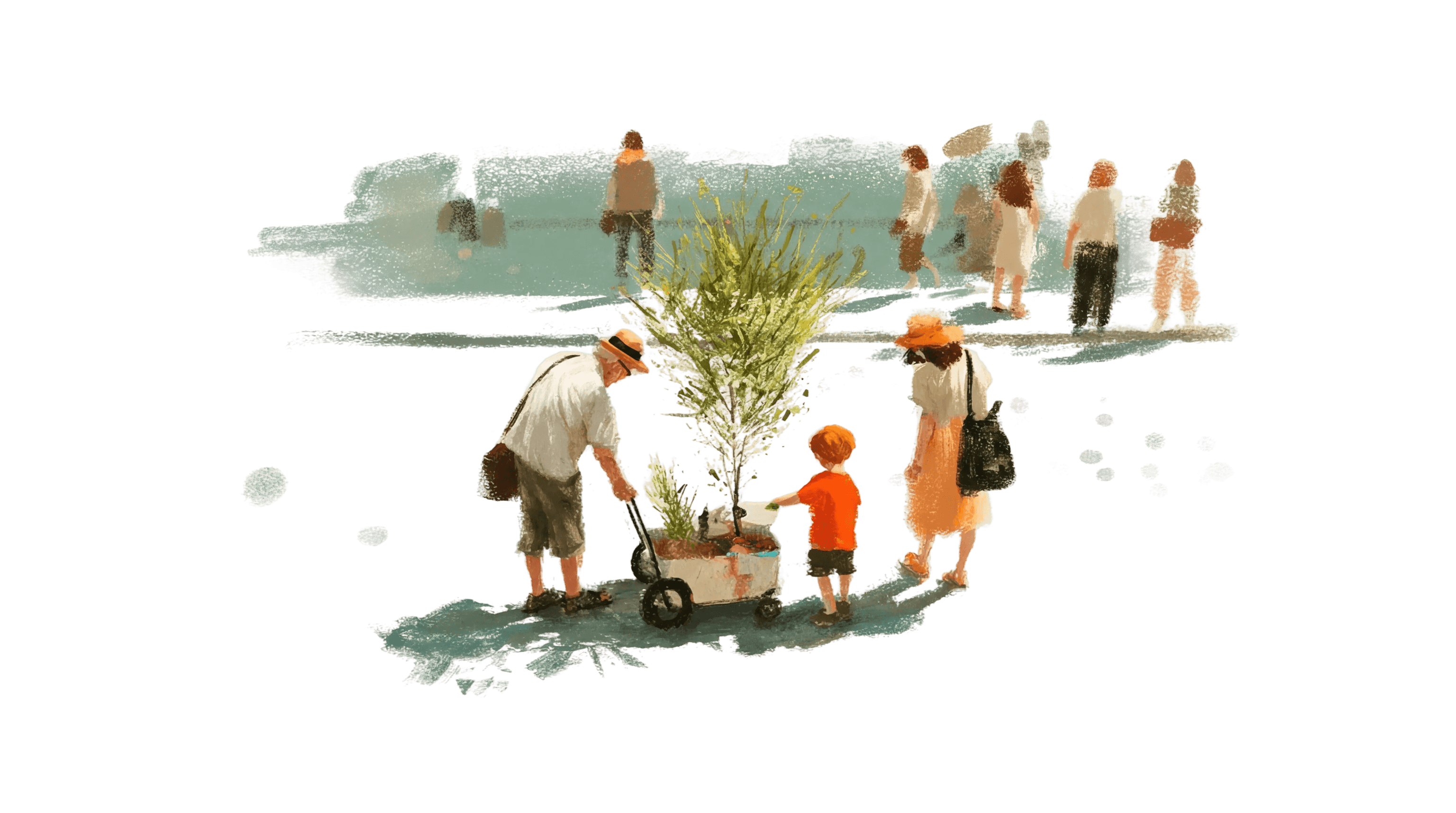
Our son Oscar is 18 months old. He waves at everyone on the street. He shows his biscuit to strangers in the supermarket queue. He hasn't learned yet that you're supposed to pretend the person next to you doesn't exist.
I watch him and I think: every installation in that book, every pop-up tomorrow, every painted cave in Stockholm is trying to recover what a toddler does without thinking. Turn to the person next to you. Show them what you have. See what happens.
I don't have a conclusion. I have two things I read and heard in the same month that are still buzzing against each other in my head The infrastructure for human connection isn't missing. We just stopped building it. A swing is a permission slip. A temporary forest is a permission slip. A painted cave 40 meters underground in Stockholm in 1957 was a permission slip that's still valid.
I keep thinking about what else could be a permission slip. I don't have answers. I have the feeling you get when you've read something that opened a door you didn't know was there, and you're standing in the doorframe, and the air on the other side smells different.
I think that's what Hopkins means by stocking the cupboard. This book stocked mine.